Lesson 1: Understanding Dog Nail Anatomy and Safe Nail Trimming
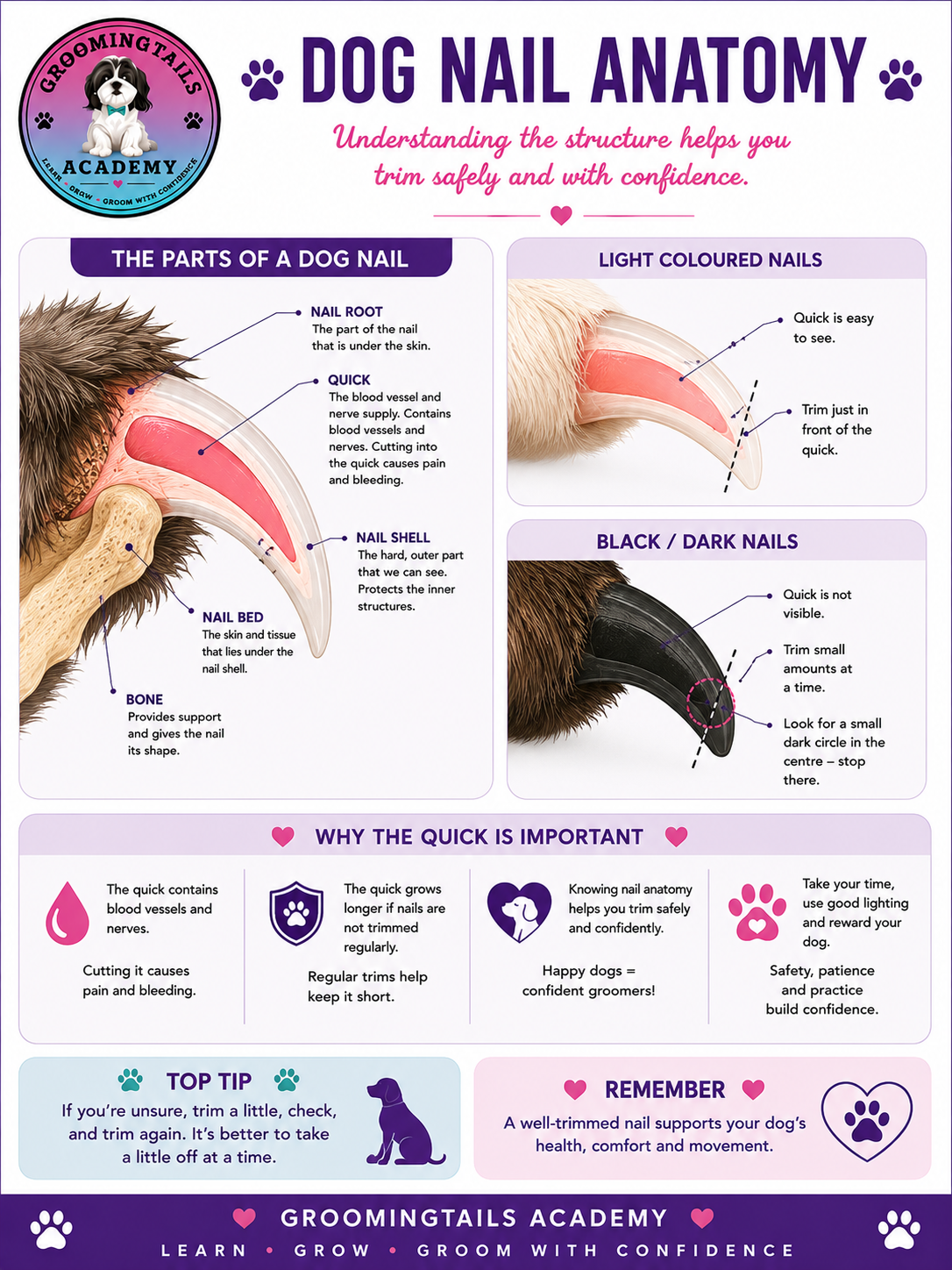
Nail trimming is one of the most commonly feared grooming procedures for both groomers and pet owners. Many groomers feel nervous about causing pain, making a dog fearful, or accidentally cutting into the quick.
Confidence begins with knowledge.
Understanding nail anatomy and learning safe handling techniques will help you approach nail trimming with greater calm, accuracy, and professionalism.
Understanding Nail Anatomy
A dog’s nail is made up of two main parts:
The Nail Shell
This is the hard outer covering that we trim during grooming. It is made of keratin, similar to human fingernails.
The Quick
The quick is the soft inner core of the nail containing blood vessels and nerves.
The quick is highly sensitive. Cutting into it causes:
Pain
Bleeding
Stress for the dog
Reduced trust during future grooms
In light-coloured nails, the quick is often visible as a pink centre.
In black nails, the quick cannot be easily seen, so trimming must be gradual and careful.
Safe Nail Trimming Principles
Before trimming:
1. Assess the Dog
Observe:
Body language
Stress signals
Paw sensitivity
Previous handling reactions
Never rush an anxious dog.
2. Choose the Right Tools
Common tools include:
Scissor clippers
Guillotine clippers
Nail grinders (Dremels)
Use sharp, well-maintained equipment. We will cover this at length later on.
3. Trim Small Amounts
Always remove small sections at a time.
This is especially important for black nails.
Small trims reduce the risk of hitting the quick.
4. Watch the Nail Centre
As you trim deeper into the nail, watch the cut surface.
A darker or softer centre can indicate you are approaching the quick.
Stop before reaching this point.
Handling the Dog Safely
Good restraint should support the dog without causing distress.
Remember:
Hold the paw securely but gently
Avoid twisting joints
Work calmly
Use reassurance and breaks when needed
Your energy affects the dog.
Calm handling encourages cooperation.